solar battery
lithium-ion
lead-acid
energy storage
DoD
battery capacity
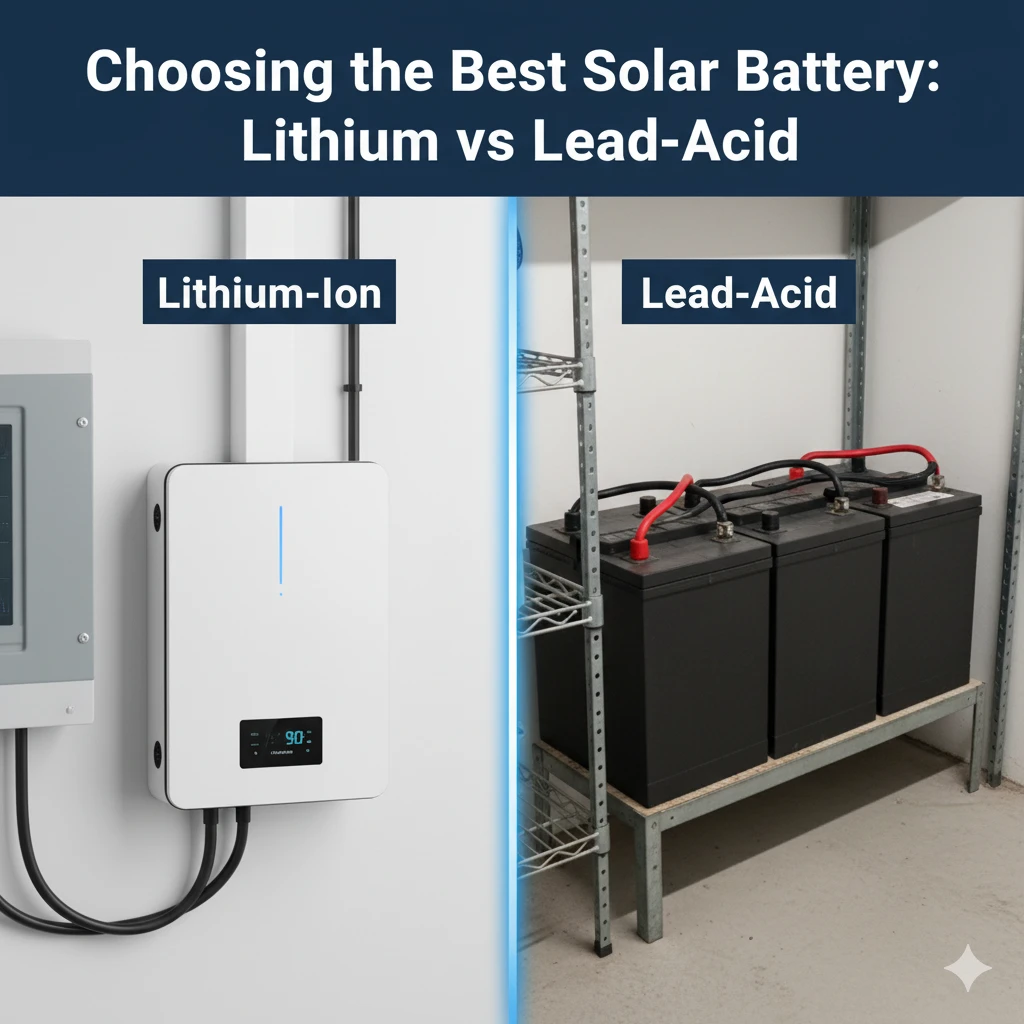
Choosing the Best Solar Battery: Lithium-Ion vs. Lead-Acid
2025-10-24T00:00:00.000Z
🔋 Power Storage Showdown: The Essential Battery Comparison
For off-grid systems and backup power, batteries are non-negotiable. The two main types have distinct pros and cons.
1. Lithium-Ion Batteries (The Modern Standard)
The same technology found in electric vehicles, offering high performance and a compact footprint.
- ✅ **Pros:** High Depth of Discharge (DoD) of 80-100%, long lifespan (10-15 years), compact and maintenance-free.
- ❌ **Cons:** Highest upfront cost.
- **Best For:** Hybrid/Grid-Tied homes needing premium backup power. (e.g., Tesla Powerwall, LG Chem)
2. Lead-Acid Batteries (The Budget Option)
The oldest and most established technology, typically used in vehicles and simple off-grid setups.
- ✅ **Pros:** Lowest upfront cost, easily recyclable.
- ❌ **Cons:** Low Depth of Discharge (only 50% recommended), shorter lifespan (3-5 years), requires ventilation and maintenance (watering).
- **Best For:** Simple, small off-grid applications where cost is the primary concern.
Key Metrics: DoD and Capacity (kWh)
**Depth of Discharge (DoD)** is the percentage of the battery's capacity you can use without damaging it. **Capacity (kWh)** is the total amount of energy it can store. These two metrics are the most important when comparing batteries. 💡