DIY solar
professional installation
solar cost
solar safety
solar warranties
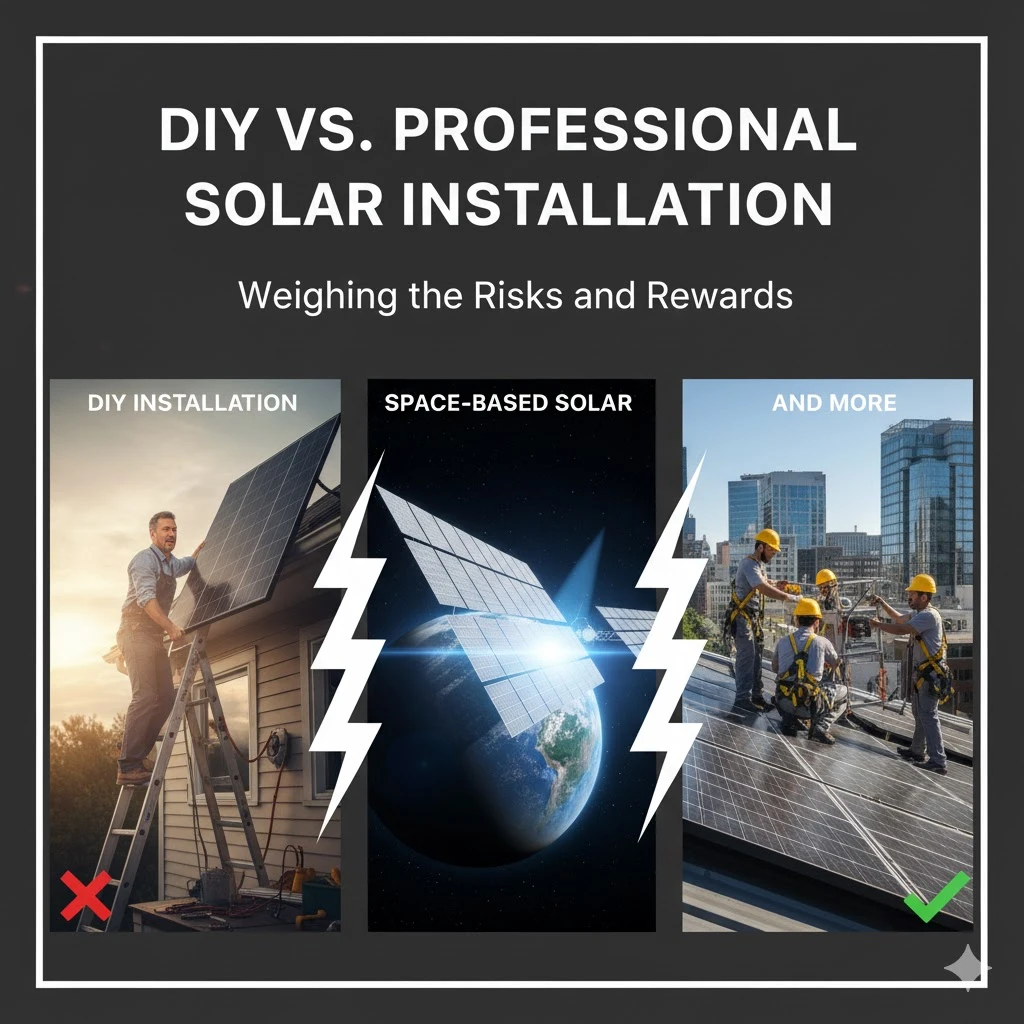
DIY vs. Professional Solar Installation: Weighing the Risks and Rewards
2025-10-24T00:00:00.000Z
🛠️ Hands-On or Hire Out: Is a DIY Solar Project Right for You?
While DIY can save on labor costs, the complexity, safety risks, and warranty issues often make professional installation the smarter long-term choice for most homeowners.
1. Professional Installation (The Standard)
Using a certified, licensed, and insured solar contractor.
- ✅ **Pros:** Installer handles all permitting, warranties are valid, installation is safe and code-compliant, and the system is guaranteed to pass inspection.
- ❌ **Cons:** Higher upfront cost (labor is typically 10-20% of the total).
2. DIY Installation (High Risk/High Reward)
Purchasing components and installing the system yourself.
- ✅ **Pros:** Significant cost savings on labor.
- ❌ **Cons:** Difficulty with permitting and inspection, potential voiding of product warranties (if not installed by a certified electrician), high safety risk on the roof, and the homeowner must handle all grid interconnection paperwork.
The Hybrid Approach
For a good compromise, consider a hybrid approach: DIY the physical mounting of the panels and running the conduit, but hire a licensed electrician to handle the critical wiring (AC/DC connections, inverter, main panel) to ensure code compliance and maintain warranties. 💡