cloudy days
solar myths
panel efficiency
diffuse light
winter solar
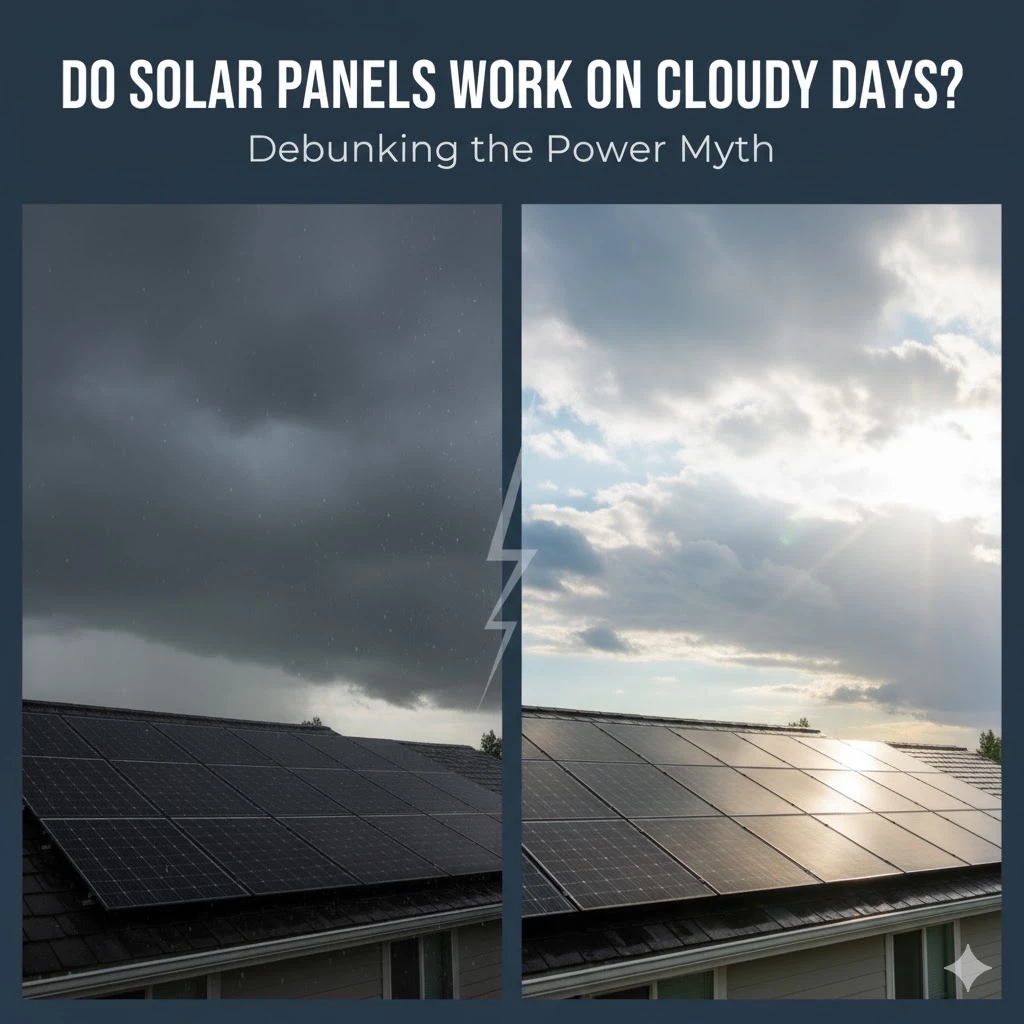
Do Solar Panels Work on Cloudy Days? Debunking the Power Myth
2025-10-24T00:00:00.000Z
☁️ Battling the Clouds: Solar Output in Non-Ideal Weather
It's a common misconception that solar panels need bright, direct sun. They actually harness both direct and indirect light.
1. The Role of Diffuse Sunlight
Solar panels use a phenomenon called the **photovoltaic effect**, which only requires light photons, not heat or direct sun intensity.
- ✅ **Cloudy Day Output:** Panels can still produce **10% to 25%** of their peak power on heavily overcast days.
- ✅ **Temperature Factor:** Solar panels are actually more efficient in cooler temperatures, provided there is sunlight. Heat can *decrease* efficiency.
- **Rainy Days:** Rain helps clean the panels of dust, which paradoxically can *improve* efficiency after the storm passes.
2. How Your System Compensates
Your overall annual energy plan is built around these variations.
- **Net Metering:** You draw power from the grid when the sun is low and 'pay back' the grid with excess power generated on sunny days.
- **Battery Storage:** A solar battery provides stored energy for night-time or extended periods of poor weather.
Conclusion
Solar panels definitely generate less power on a cloudy day, but they do **not** stop working entirely. Modern systems and net metering ensure your home remains powered year-round, even in less sunny climates. 💡