
self-consumption
net metering
NEM 3.0
solar battery ROI
load shifting
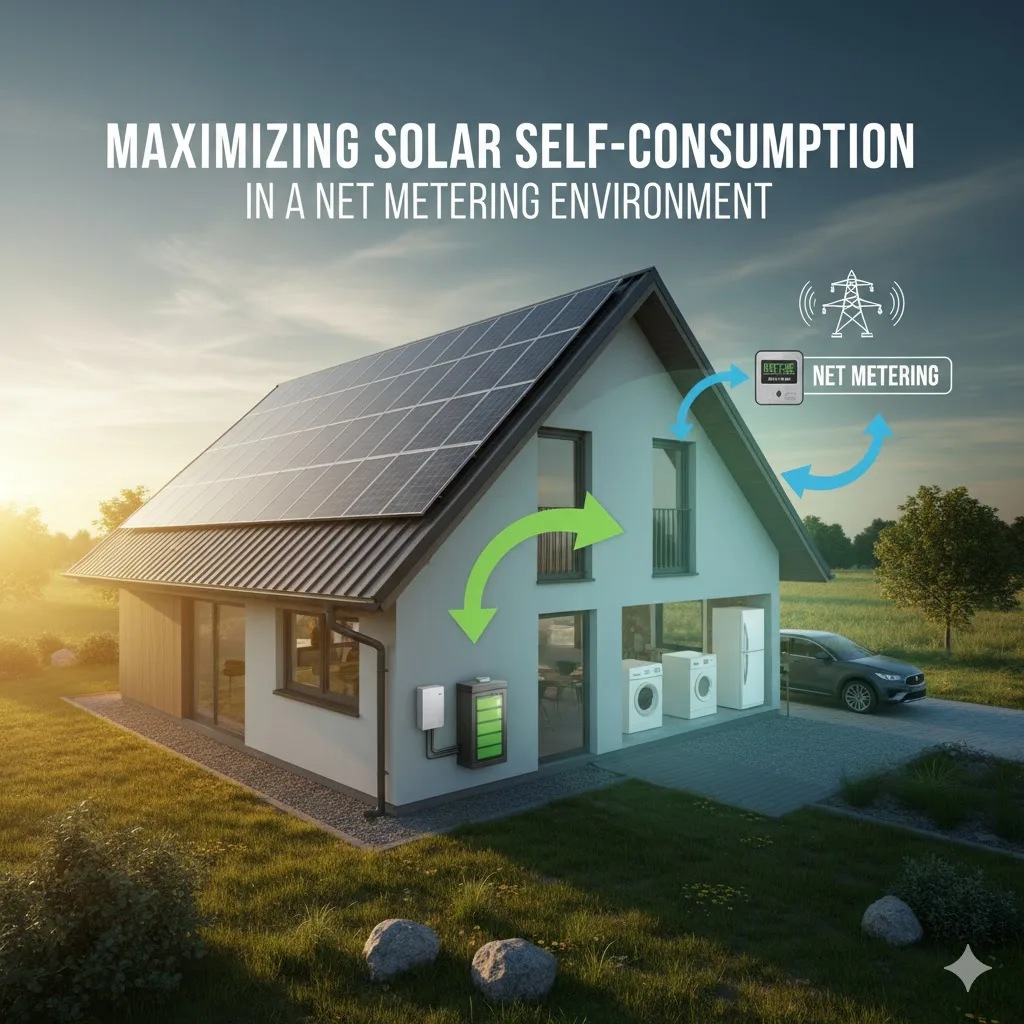
Maximizing Solar Self-Consumption in a Net Metering Environment
2025-10-24T00:00:00.000Z
🏠 Use It or Lose It: Getting the Most Value from Your Generated Power
As utility companies reduce the value of Net Metering (selling power back), maximizing your **self-consumption** (using the power as you generate it) becomes key to maximizing savings.
1. The Financial Incentive
Your self-consumed power is worth the most money.
- ✅ **Value:** Self-consumed power saves you the full retail price (including transmission fees, taxes, etc.). Power sold back is often only worth the lower wholesale rate.
- ✅ **Goal:** Shift high-draw loads to the hours of peak solar production (10 AM - 4 PM) to use the power immediately.
2. Tools for High Self-Consumption
Technology helps automate the shift in usage.
- **Solar Batteries:** The ultimate tool. They store excess daytime energy for use in the evening, ensuring 80%+ of your solar energy is used by your home.
- **Smart Timers:** Program appliances (pool pumps, water heaters, dishwashers) to run only during midday solar hours.
- **Load Management Devices:** Specialized devices that automatically divert excess solar to high-draw loads (like an electric water heater) before sending it to the grid.
Impact of New Net Metering Rules
In areas with Net Metering 3.0 or similar successor tariffs, the ROI of a battery drastically improves. The battery allows you to capture the high value of your solar production when you need it (evening peak) instead of giving it to the utility cheaply. 💡