microgrids
energy resilience
grid modernization
solar storage
island mode
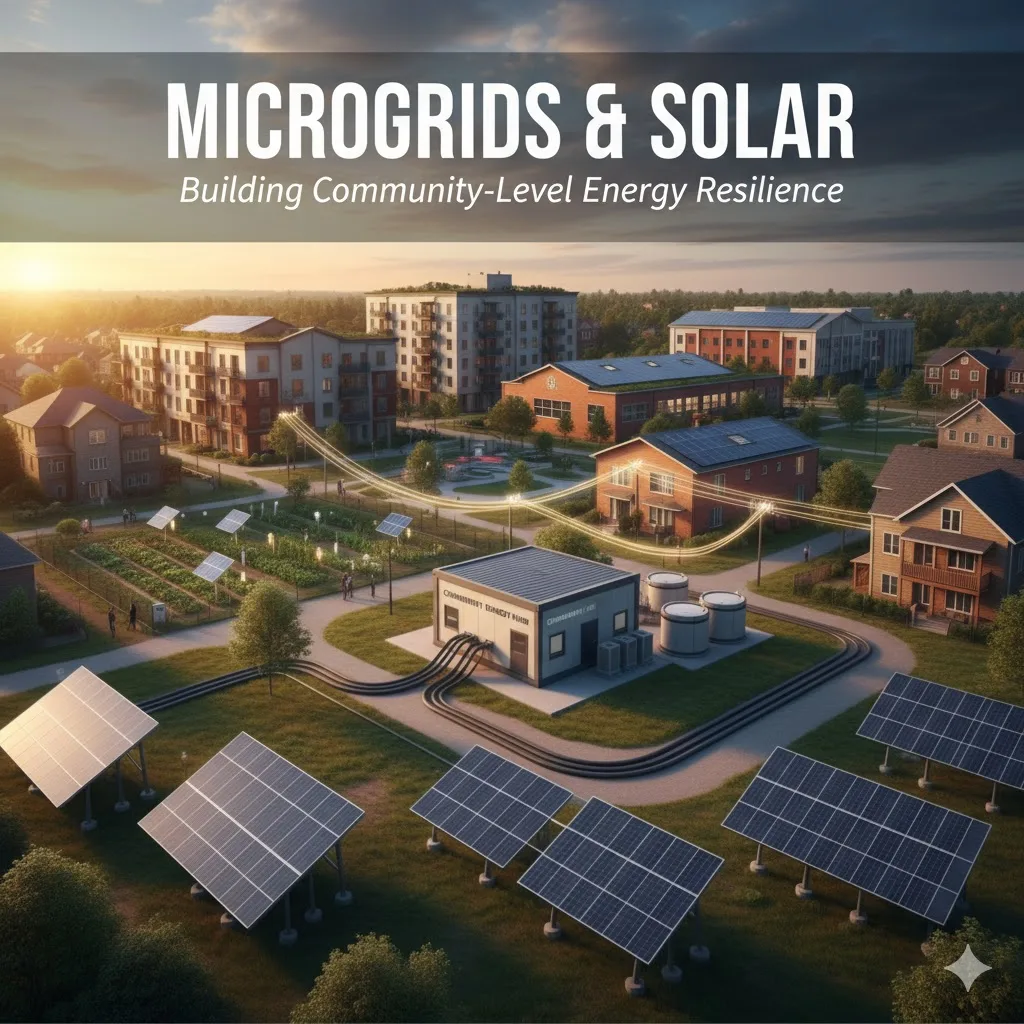
Microgrids and Solar: Building Community-Level Energy Resilience
2025-10-24T00:00:00.000Z
🔗 Local Power: Solar's Role in Decentralizing the Electric Grid
A microgrid is a localized power system that can operate connected to the main grid, or autonomously ('islanding') during an outage, providing critical resilience.
1. What is a Microgrid?
It's a group of interconnected loads and distributed energy resources (DERs) within a defined electrical boundary.
- ✅ **Key Components:** Local solar generation, energy storage (batteries), and a sophisticated **Microgrid Controller** that manages the transition between grid-connected and island modes.
- ✅ **Applications:** Hospitals, universities, military bases, and neighborhoods needing uninterrupted power.
2. Solar as the Primary Generation Source
Solar PV is the most common and cost-effective generation source for modern microgrids.
- **Daily Energy:** Solar provides clean power during the day, reducing reliance on fossil fuel generators.
- **Storage:** The solar energy is stored in the central battery bank, providing power overnight and during islanding events.
Island Mode and Resilience
Microgrids significantly enhance energy security. When the main grid fails (due to weather, cyberattack, etc.), the microgrid controller instantaneously disconnects and relies on its own solar + battery capacity, ensuring essential services remain powered. 💡