
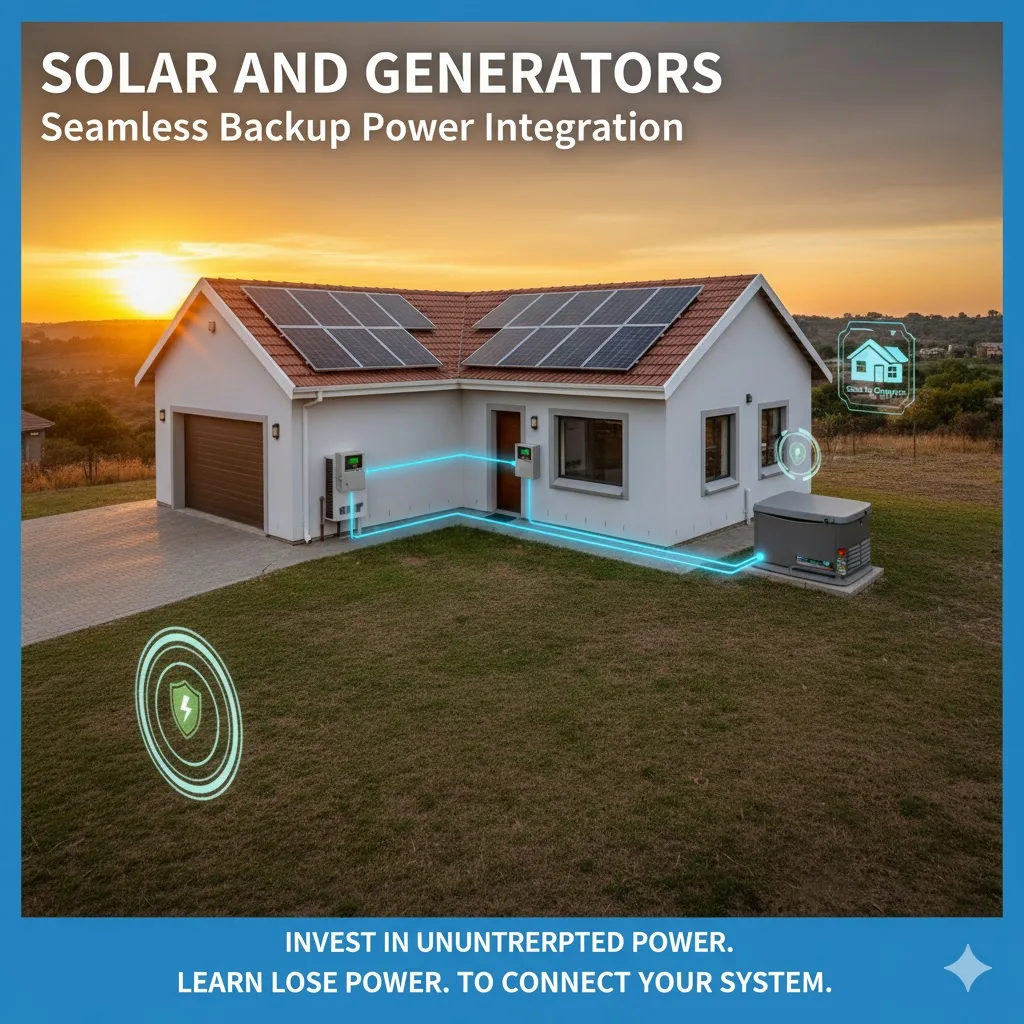
solar generator integration
hybrid solar
automatic transfer switch
generator backup
solar battery charging
Solar and Generators: Seamless Backup Power Integration
2025-10-24T00:00:00.000Z
⛽ Hybrid Resilience: Pairing PV with Gas/Propane Backup
For maximum energy security, many solar systems integrate a standby generator. This hybrid setup provides power continuity far beyond what a solar-only battery can offer.
1. Why Integrate a Generator?
Generators provide extended power during grid failures, overcoming solar limitations.
- ✅ **Extended Autonomy:** The generator can run for days or weeks (with fuel) to power the home when the solar battery runs low due to extended bad weather or night-time use.
- ✅ **High-Load Backup:** Generators can run high-draw appliances (like central AC) that a battery may not be sized to handle.
2. Smart Inverter Integration (The Brains)
The solar system's hybrid inverter must be specifically designed to manage the generator.
- **Generator Start/Stop:** The inverter monitors the battery's state of charge (SoC) and automatically starts the generator when the battery drops below a threshold (e.g., 20%).
- **Battery Charging:** The generator is used to recharge the solar battery. Once the battery is sufficiently charged, the inverter shuts the generator off, saving fuel and wear.
- **Transfer Switch:** An automatic transfer switch (ATS) safely manages the transition between utility power, solar power, and generator power.
Fuel Efficiency
By using the generator only to recharge the highly efficient solar battery (instead of running the entire house directly), the system significantly reduces generator run time and fuel consumption, improving efficiency and lowering noise pollution. 💡