solar recycling
PV waste
end of life solar
solar sustainability
recycling process
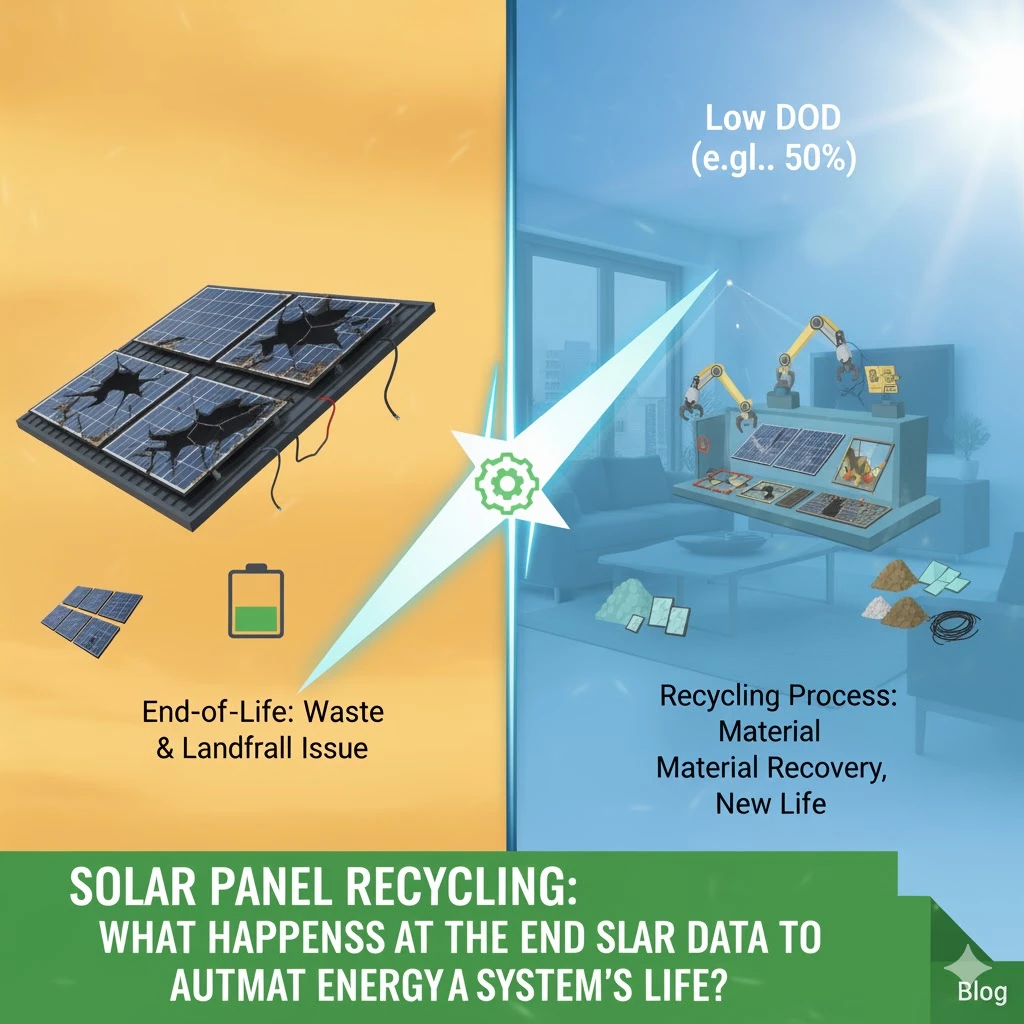
Solar Panel Recycling: What Happens at the End of a System's Life?
2025-10-24T00:00:00.000Z
♻️ Full Circle: The Growing Industry of Photovoltaic Waste Management
As the solar industry matures, the focus shifts to sustainability. Modern panels are highly recyclable, and the infrastructure is rapidly developing.
1. The Panel Breakdown (Materials)
Solar panels are predominantly made of high-value, reusable materials.
- ✅ **Glass:** 65-75% of the panel's weight. Easily separated and recycled into new glass products.
- ✅ **Aluminum:** The frame is 8-10% of the weight. Highly recyclable.
- **Silicon:** The cells contain pure silicon (2-4%), silver, and copper—all valuable materials that are recovered.
2. The Recycling Process
Specialized facilities separate the materials using thermal, chemical, and mechanical processes.
- **Initial Separation:** The aluminum frame and junction box are manually removed.
- **Thermal Treatment:** Heating the panel melts the encapsulant (EVA), allowing the glass and silicon cells to be separated and refined.
- **Recovery:** Up to 95% of the glass and metal can be recovered and reused in manufacturing new products.
End-of-Life Planning
Since panels last 25-30 years, most current systems won't be retired for decades. However, major manufacturers are already partnering with recycling programs to ensure that end-of-life logistics are in place when the time comes. 💡