
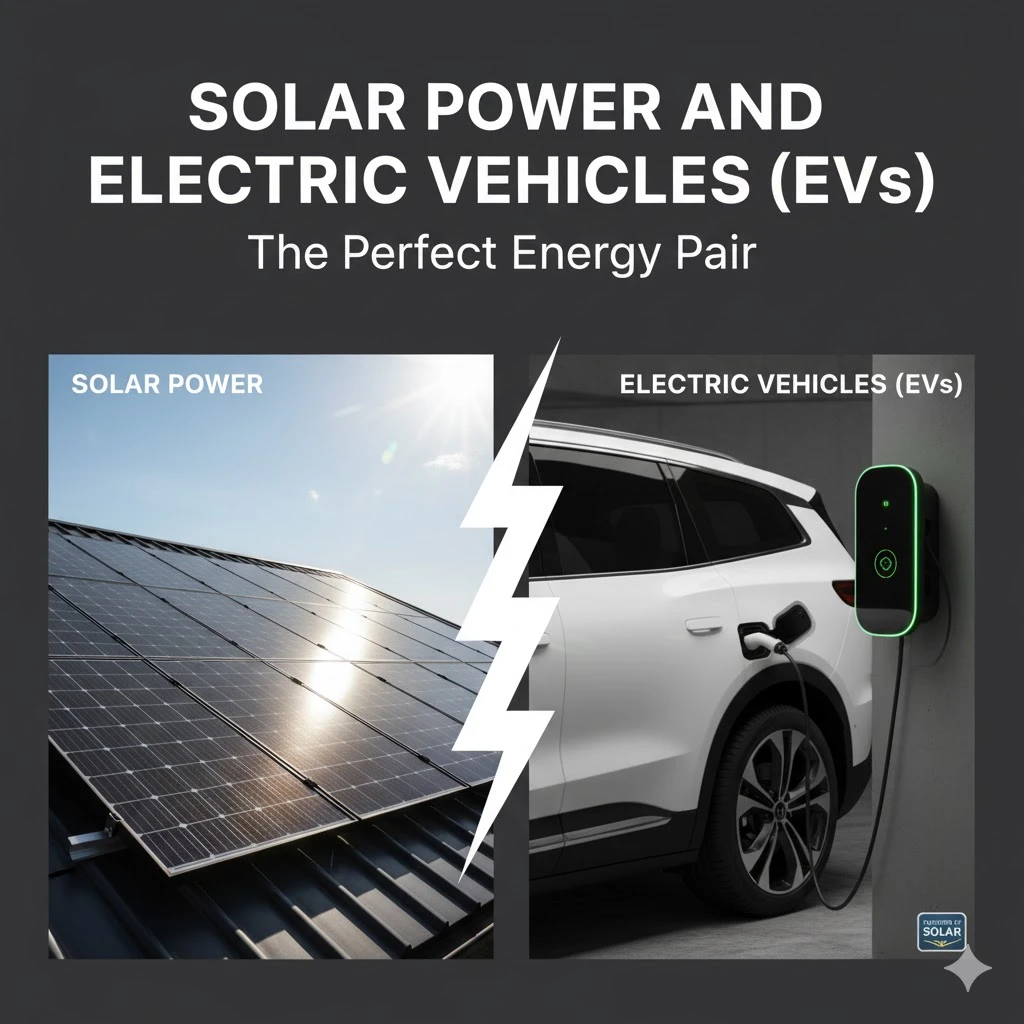
solar and EV
EV charging
V2G
electric vehicle
solar sizing
Solar Power and Electric Vehicles (EVs): The Perfect Energy Pair
2025-10-24T00:00:00.000Z
🚗 Fueling the Future: Driving on Sunshine with Home Solar
Pairing home solar with an electric vehicle eliminates nearly all of your household's fossil fuel consumption, making it a true zero-emissions solution.
1. Sizing Your System for EV Charging
An EV significantly increases your annual electricity usage, requiring a larger solar array.
- ✅ **Increased Demand:** Charging an average EV 12,000 miles per year can add 2,000 to 4,000 kWh annually to your consumption, requiring about 6-12 additional solar panels.
- ✅ **Cost:** The good news is that generating this energy with solar is far cheaper than paying for gasoline, drastically improving your solar system's ROI.
2. Smart Charging and Time-of-Use (TOU) Rates
Timing your charging maximizes the use of free solar power.
- **Daytime Charging:** If possible, charge your EV during peak solar production (10 AM - 3 PM) to use direct solar energy instead of grid power.
- **Smart Chargers:** Many EV chargers can be programmed to charge only when solar production is high or when utility rates are lowest (often overnight).
Vehicle-to-Grid (V2G) Technology
V2G technology allows your EV battery to send power *back* to your home or the grid during peak demand or outages, turning your car into a massive, portable solar battery backup. This is the next frontier in solar and EV integration. 💡