
off-grid solar
off-grid sizing
days of autonomy
solar components
off-grid inverter
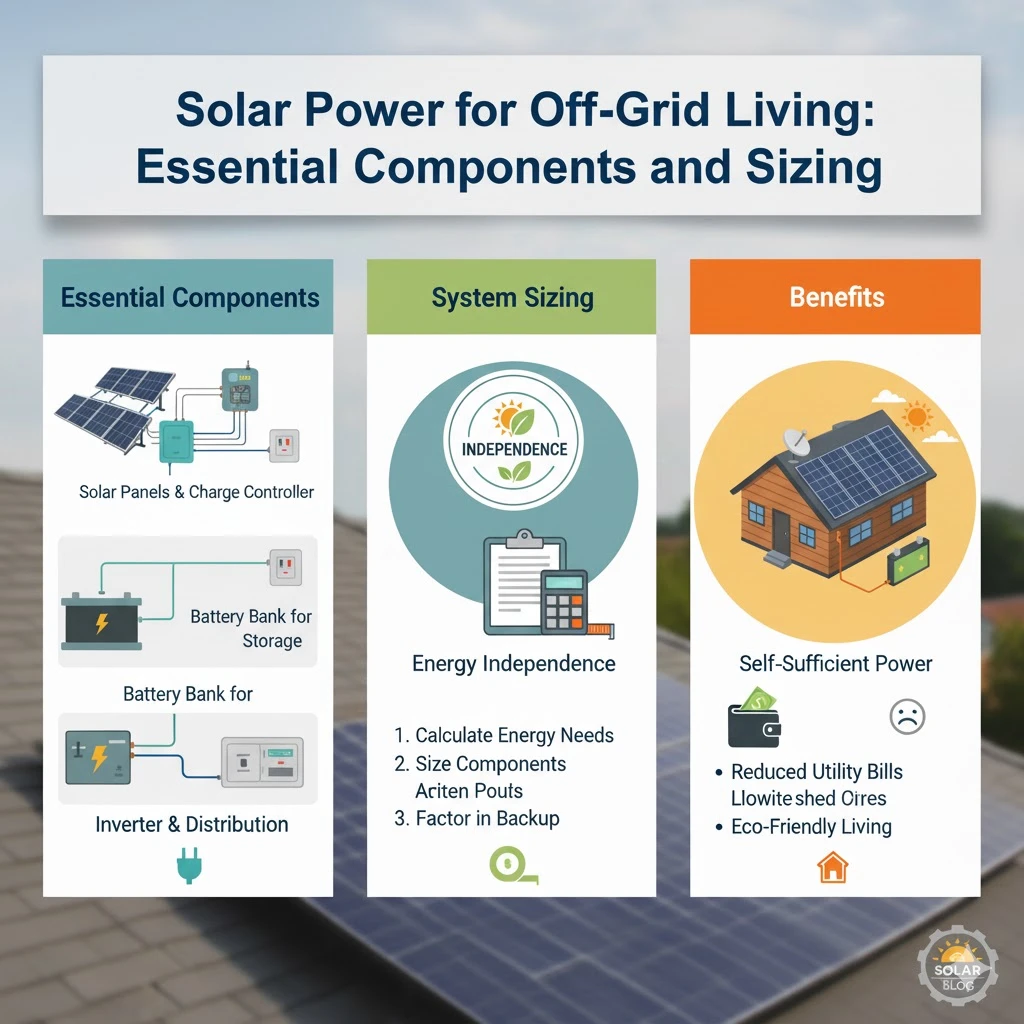
Solar Power for Off-Grid Living: Essential Components and Sizing
2025-10-24T00:00:00.000Z
🏕️ True Independence: Designing a Reliable Off-Grid Solar System
Living off-grid requires careful attention to component sizing to ensure power is available 24/7, even during extended periods of bad weather.
1. Energy Audit and Load Calculation
The first step is meticulously documenting the energy use of every appliance.
- ✅ **Daily kWh:** Calculate the total daily kilowatt-hour (kWh) consumption required to run all appliances.
- ✅ **Surge Load:** Identify the highest simultaneous power requirement (e.g., microwave and well pump running together) to size the inverter correctly.
2. The Core Components
Unlike grid-tied, off-grid systems require specific, dedicated equipment.
- **Solar Panels:** Sized to generate daily needs *plus* enough extra to fully recharge the batteries.
- **Battery Bank:** Sized for required **Days of Autonomy** (how long the battery can run the house without sun—typically 3-5 days).
- **MPPT Charge Controller:** Essential for maximizing battery charging efficiency.
- **Off-Grid Inverter:** A heavy-duty inverter capable of handling the entire home's peak load.
Backup Generator
Nearly all reliable off-grid systems include a gas or diesel generator for backup. It provides emergency power and can charge the batteries if sunlight is consistently insufficient over multiple days. 💡