
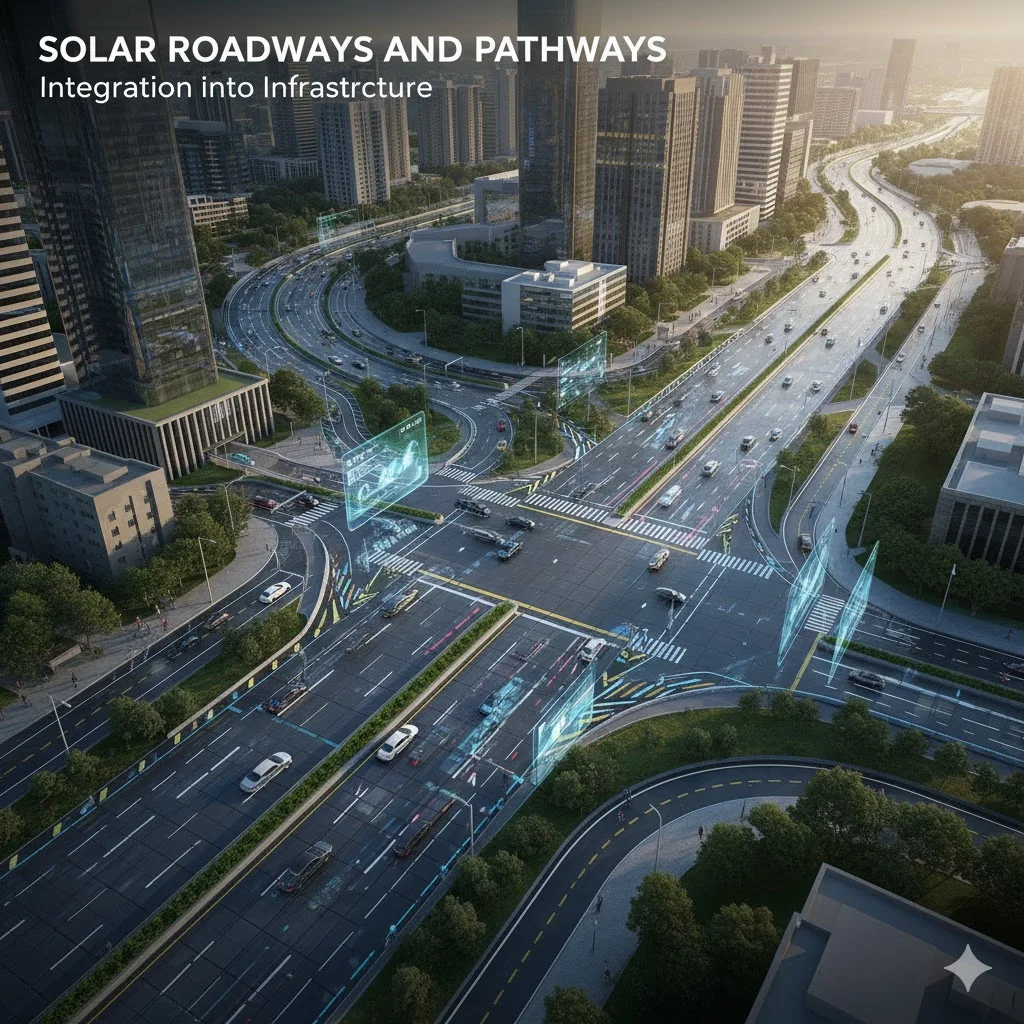
solar roadways
solar infrastructure
PV pavement
solar tunnels
wireless EV charging
Solar Roadways and Pathways: Integration into Infrastructure
2025-10-24T00:00:00.000Z
🛣️ PV Pavement: Challenges and Potential of Solar Panels Underfoot
The concept of solar roadways involves replacing traditional pavement with durable, tempered glass solar panels that generate power, but the technology faces significant hurdles in cost and durability.
1. Applications and Use Cases
Solar pavement is currently better suited for low-load, niche applications.
- ✅ **Pathways/Bicycle Trails:** Successfully piloted in areas like public parks where vehicle loads are minimal, generating small amounts of power for local lighting.
- ✅ **Solar Tunnels:** Covering existing infrastructure (e.g., train lines, canals) with PV panels is proving far more effective than replacing the road surface itself.
- **Charging Pads:** Panels embedded in parking lots can be designed for wireless EV charging, creating an immediate use case for the energy generated.
2. Critical Challenges for Road Use
The efficiency and cost equations don't currently favor high-traffic installation.
- **Durability:** Glass panels must withstand the weight and wear of heavy traffic, requiring extremely thick, durable, and expensive materials.
- **Efficiency Loss:** Road-embedded panels are often flat (no optimal tilt) and quickly covered in dirt, tire rubber, and grime, drastically lowering their energy output compared to rooftop panels.
The Future of Integration
While true solar roadways remain experimental, the future is likely in **Solar Noise Barriers** (PV integrated into highway sound walls) and PV carports/canopies that utilize existing, stable structures. 💡