solar recycling
environmental impact
energy payback time
solar manufacturing
PV lifecycle
The Environmental Impact of Solar Panel Manufacturing and Recycling
2025-10-24T00:00:00.000Z
♻️ Full Circle Energy: Addressing the Lifecycle of PV Technology
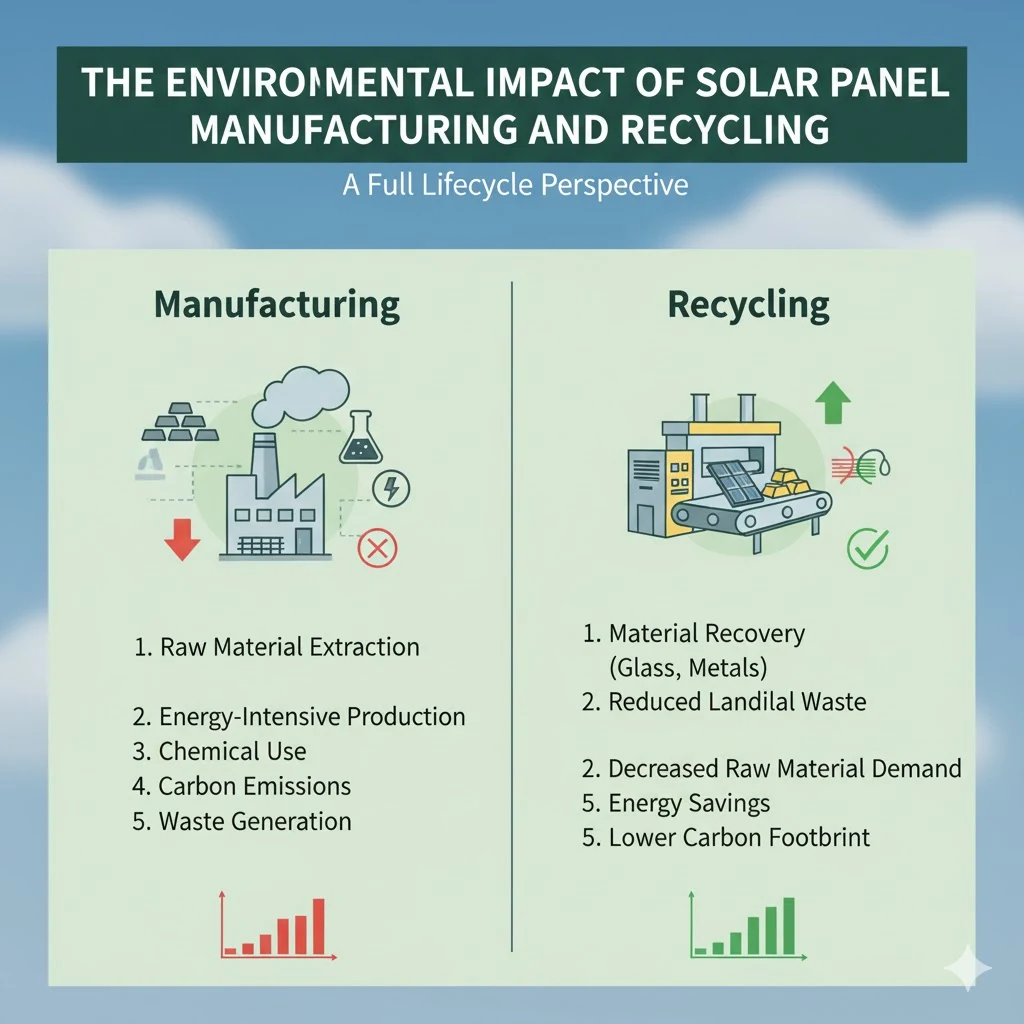
While solar power is clean during operation, manufacturing requires energy and materials. The industry is rapidly addressing the full lifecycle impact, particularly end-of-life recycling.
1. Energy Payback Time (EPBT)
The time a solar panel must operate to generate the amount of energy consumed in its own production.
- ✅ **Metric:** Thanks to modern, efficient manufacturing, the EPBT for a standard silicon panel is typically **1 to 4 years**, far shorter than its 25-40 year operational lifespan.
- ✅ **Carbon Payback:** Similarly, the **carbon footprint** of the panel is offset by clean electricity generation within the first few years.
2. The Challenge of Recycling
The first wave of residential solar systems is just starting to reach its end-of-life.
- **Material Recovery:** Solar panels are 90% glass and aluminum (easily recyclable). The challenge lies in efficiently recovering the remaining silicon, silver, and copper—valuable but complex to separate.
- **Global Infrastructure:** Recycling facilities specifically designed for PV panels are expanding rapidly in Europe and North America to handle the influx of end-of-life panels expected by 2030-2040.
Cadmium and Thin-Film
Thin-film solar panels (using Cadmium Telluride/CdTe) are highly recyclable, with manufacturers like First Solar offering mandatory take-back and recycling programs for every panel they sell, ensuring a closed-loop system for the materials. 💡