solar cell evolution
PERC solar
monocrystalline
polycrystalline
thin film solar
solar generations
The Evolution of Solar Cells: From First Gen to Monocrystalline PERC
2025-10-24T00:00:00.000Z
📈 Efficiency Jumps: Tracing the History of Photovoltaic Technology
Solar technology has rapidly advanced, moving from thick, inefficient cells to the high-efficiency, durable panels we install today.
1. First Generation: Crystalline Silicon (Mono & Poly)
The foundation of the modern industry, using thick slices of silicon wafers.
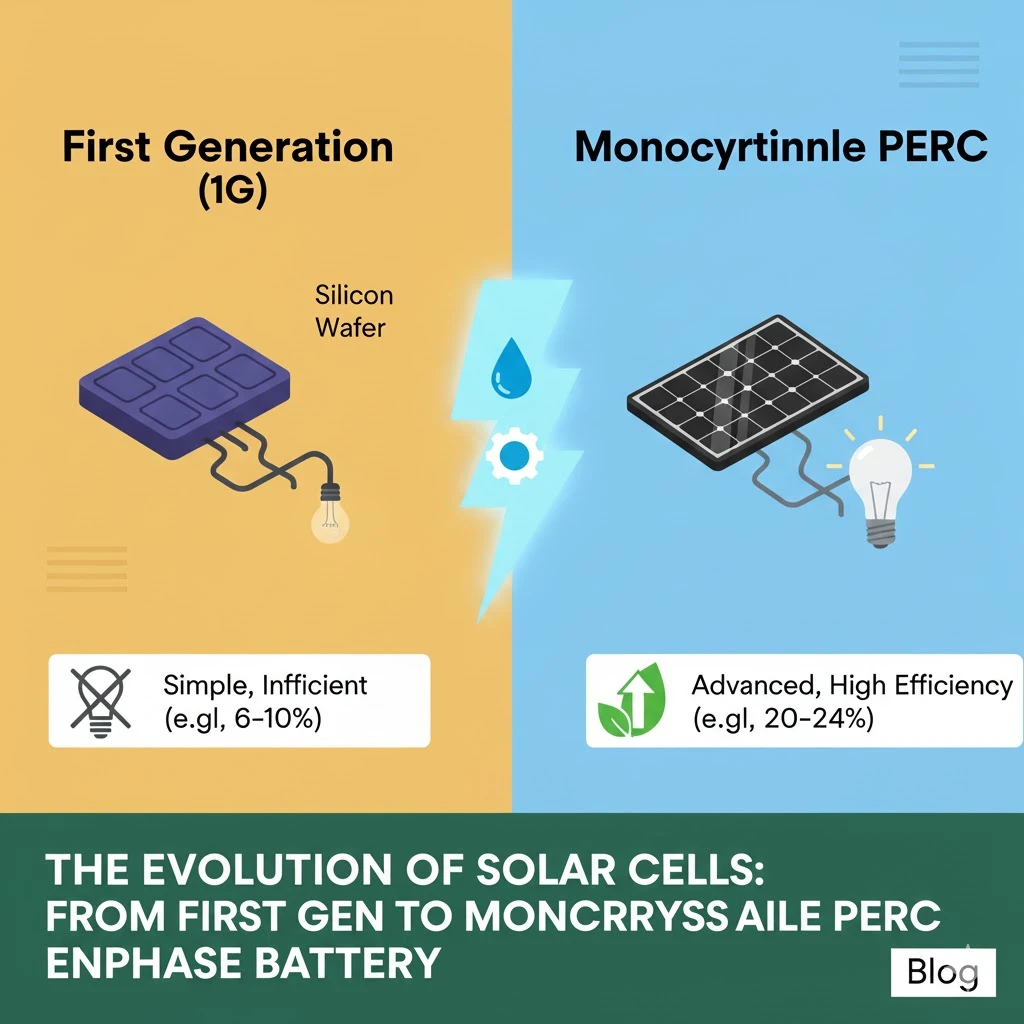
- **Monocrystalline (Mono):** Cut from a single silicon crystal; higher efficiency (15-20%) and darker color.
- **Polycrystalline (Poly):** Melted and recast silicon fragments; slightly lower efficiency (13-17%) and blue/speckled appearance.
2. Second Generation: Thin-Film
Non-silicon materials deposited in thin layers on a substrate (e.g., CdTe, Amorphous Silicon).
- **Pros:** Flexible, lighter, cheaper to manufacture.
- **Cons:** Much lower efficiency (often <10%), primarily used in large-scale solar farms or specialized consumer products.
Third Generation: PERC and Beyond
Today’s standard is **PERC (Passivated Emitter Rear Cell)** technology. This adds a dielectric layer to the back of the mono cell, reflecting unused light back into the cell for a second chance at absorption, boosting residential efficiency to 20-23%. 💡