
solar heat loss
temperature coefficient
solar efficiency
extreme heat
hot climate solar
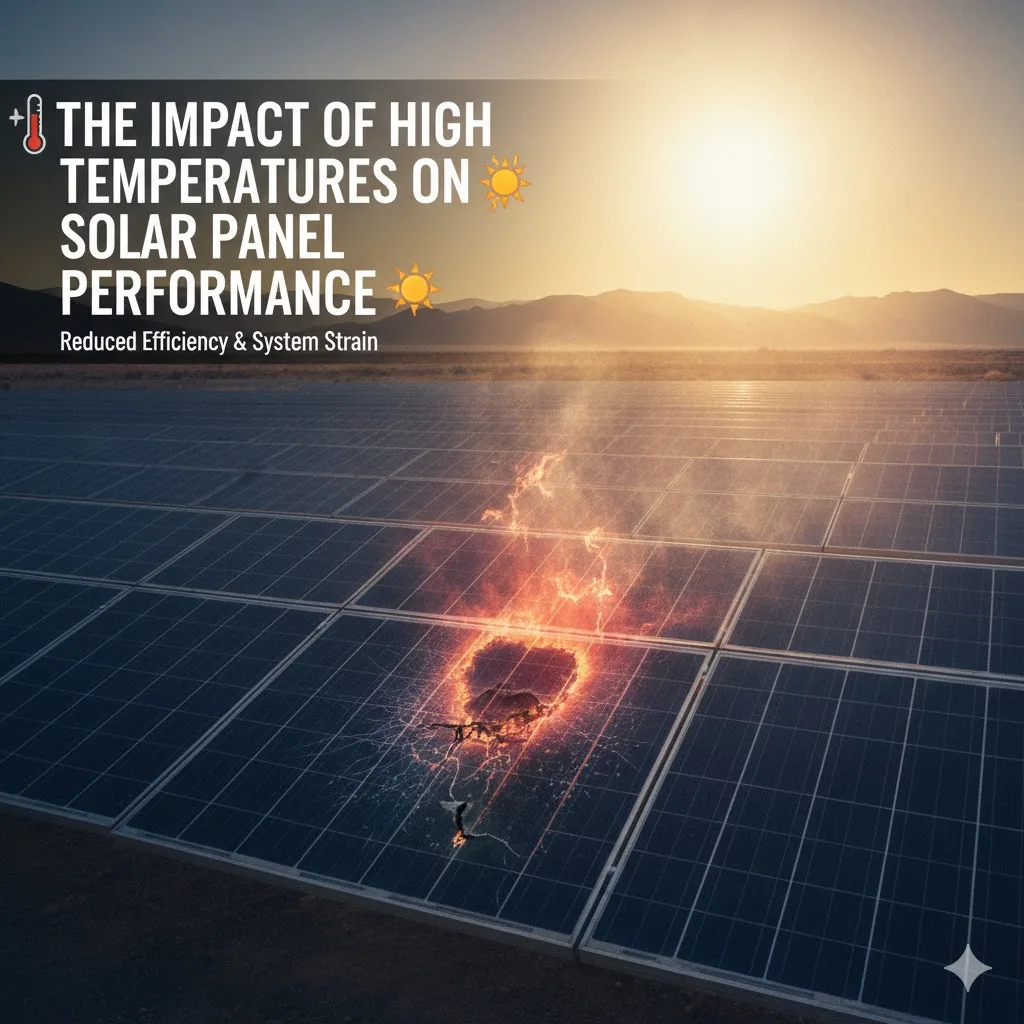
The Impact of High Temperatures on Solar Panel Performance
2025-10-24T00:00:00.000Z
🌡️ Summer Slowdown: Why Heat Reduces Solar Panel Efficiency
While panels need sun to produce, excess heat actually *reduces* their electrical efficiency. The ideal day is bright, sunny, and cool.
1. The Temperature Coefficient
This metric is the most important factor in determining heat loss.
- ✅ **Definition:** It indicates the percentage of power output a panel loses for every 1°C increase above 25°C (77°F) **Standard Test Conditions (STC)**.
- ✅ **Typical Range:** Most high-quality panels have a coefficient of **-0.3% to -0.5% per °C**. A lower (closer to zero) number is better.
2. Installation to Reduce Heat
The mounting method directly affects the panel's operating temperature.
- **Roof Gap:** Panels mounted with sufficient space (4-6 inches) between the panel and the roof allow for crucial airflow, preventing heat buildup and maintaining a lower operating temperature.
- **Color:** Black roofs absorb more heat than light-colored roofs, leading to hotter panels and slightly reduced efficiency compared to white flat roofs.
Performance vs. Degradation
It's important to distinguish: high heat **temporarily** reduces performance (coefficient loss), while high heat **permanently** accelerates the long-term degradation (aging) of the panel's materials. 💡