solar shading
micro-inverters
power optimizers
string inverter
solar efficiency
The Impact of Shading on Solar Production and How to Fix It
2025-10-24T00:00:00.000Z
🌳 The Enemy: Minimizing Power Loss from Trees and Chimneys
Even minor shading can drastically reduce the output of an entire string of solar panels if not managed correctly by modern technology.
1. The 'Christmas Light' Effect (String Inverters)
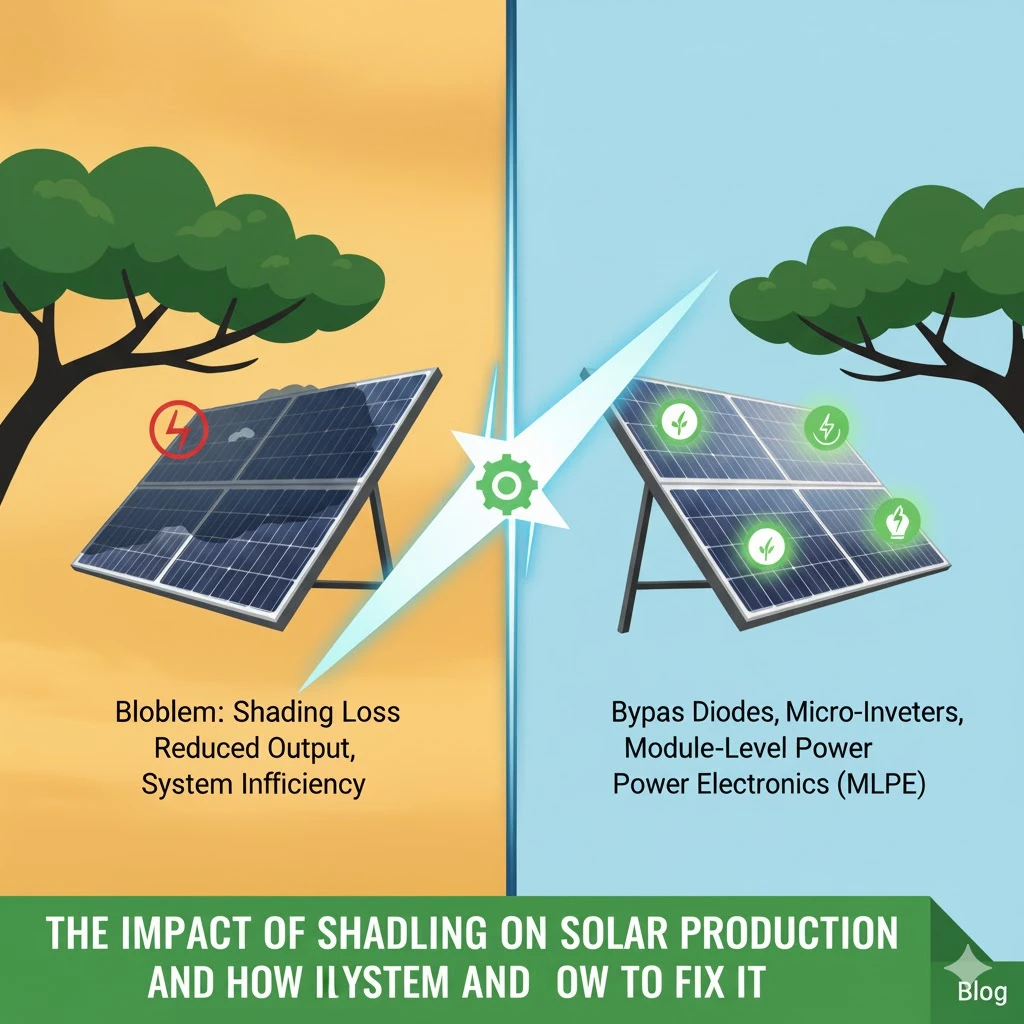
In a traditional string inverter system, all panels are wired in series. The output of the entire string is limited by the output of the weakest panel.
- ✅ **The Problem:** If one panel is 10% shaded, the output of **all** panels in that string can be reduced, sometimes by 50% or more.
2. The Modern Solution: Micro-Inverters and Optimizers
These devices ensure that each panel operates independently, mitigating the shading problem.
- **Micro-Inverters (Enphase):** The power conversion (DC to AC) happens at the back of **each** panel. If one panel is shaded, only that panel's production is affected.
- **Power Optimizers (SolarEdge):** These devices are installed at each panel to track the maximum power point (MPPT) individually, sending optimized DC power to a single string inverter.
Preventative Action
Before installation, your installer should perform a detailed sun path analysis to predict shading throughout the year. For new systems, installing micro-inverters or optimizers is essential if *any* shading issues are predicted. 💡