smart grid
demand-side management
virtual power plant
VPP
smart inverter
distributed generation
The Role of Solar in Smart Grids and Demand-Side Management
2025-10-24T00:00:00.000Z
🧠 Grid Intelligence: How Distributed Solar Helps Modernize Utilities
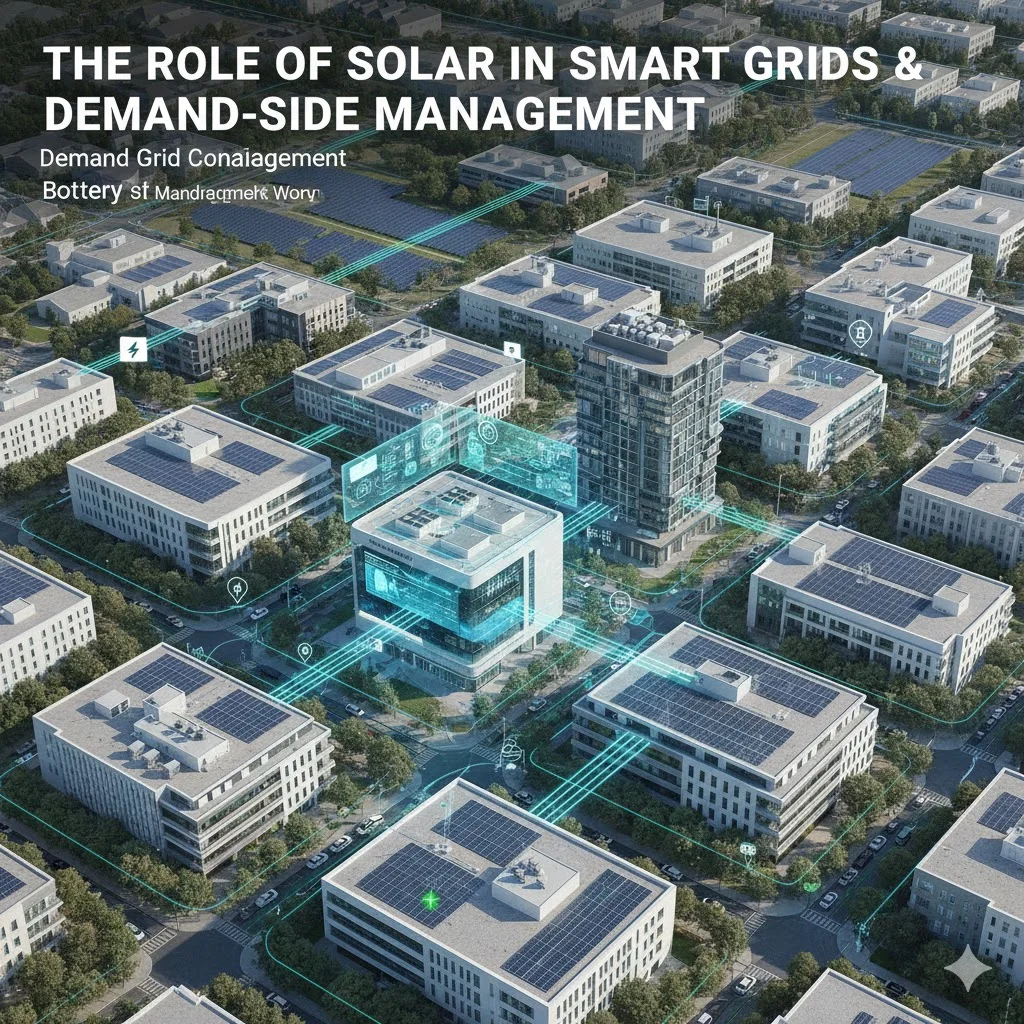
Smart grids use digital communication to manage electricity in real time. Residential solar systems are critical to this transition, offering decentralized generation.
1. Solar as Distributed Generation (DG)
Instead of one large power plant, solar provides power from thousands of small sources.
- ✅ **Load Reduction:** During sunny hours, local solar reduces the load on the utility's transmission lines and generation fleet.
- ✅ **Voltage Support:** Advanced inverters (often called 'Smart Inverters') can provide grid services like voltage and frequency support, helping to stabilize the local network.
2. Demand-Side Management (DSM)
Using solar and smart devices to influence consumption patterns.
- **TOU Rates:** Smart grids use Time-of-Use (TOU) pricing to incentivize customers to shift high-draw activities away from expensive peak hours (e.g., 4 PM - 9 PM).
- **Virtual Power Plants (VPPs):** Aggregating solar-plus-battery homes to collectively act as a single, dispatchable power plant to support the grid during emergencies or peak demand.
The Smart Grid Inverter Mandate
Many jurisdictions now mandate new solar installations include **IEEE 1547-compliant smart inverters**. These are essential because they allow the utility to remotely communicate with and control the inverter's behavior, ensuring grid stability in a high-solar environment. 💡