VILAYAT / SOLAR + STORAGE

Measure the demand behind the monthly bill.
Hybrid solar & BESS in Vilayat

Measuring the real load

Measuring the real load / Site assessment brief

For a Vilayat premises, start a solar-and-storage discussion with measured load rather than a monthly electricity total. The same energy use can come from a steady daytime business or short periods of much higher demand, and those patterns require different equipment.

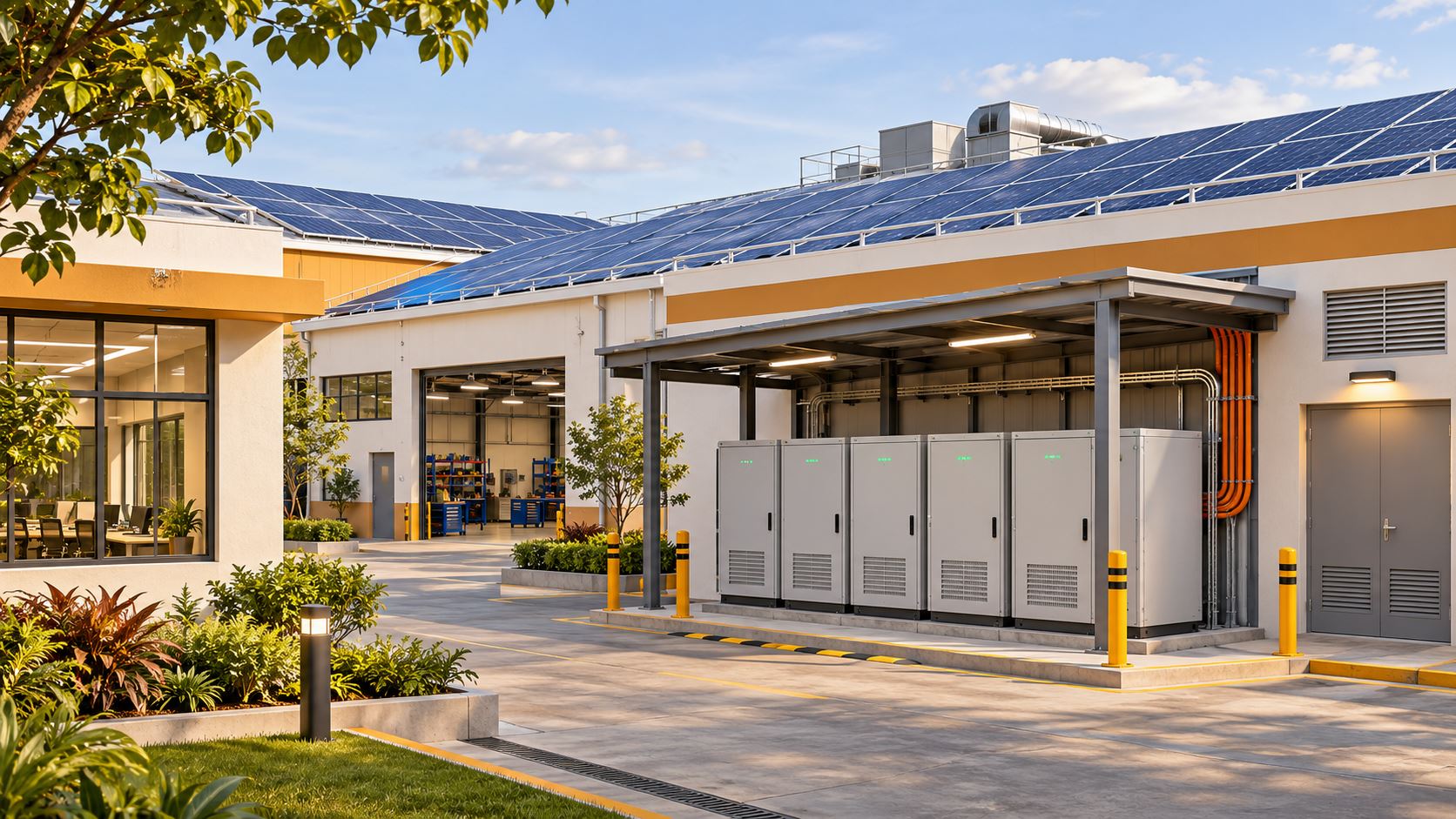
Concept illustration for measuring the real load: Spacious industrial office and utility workshop campus, extensive flat rooftop solar and a shaded storage cabinet bank beside an electrical room, courtyard eye-level architectural view, warm white and ochre
Measuring the real load. AI-generated installation concept, not a photograph of an actual Vilayat site or a completed CM Solar project.

01 / THE LOCAL BRIEF

Capture demand at the times that matter

Vilayat and Vilayat GIDC have separate guides here. This page is a first-enquiry measurement brief for a premises identified as Vilayat; estate protection and earthing questions are covered by the GIDC guide.

Take readings during normal work, busy periods and any shift change. Record the instruments used and whether the values are measured or estimated. A short observation during a quiet period should not become the assumed peak load for the whole project.

Keep a seven-day observation sheet

Record operating hours, major equipment in use and any unusual demand events for a representative working week. Combine the sheet with interval readings if available. If production varies seasonally, identify the limits of that sample and arrange further measurements rather than presenting it as a complete annual profile.

Location reference: GIDC estate directory ↗

02 / CHOOSE THE RIGHT STARTING POINT

Measuring the real load: solar and storage roles.

BESS means battery energy storage system; BSS is also used for battery storage system. Neither term alone specifies backup power, duration or transfer performance.

SOLAR + BATTERY

Solar planning: measuring the real load

Match the proposed generation profile to actual operating hours. If demand falls sharply at midday or the premises closes on certain days, include that pattern in the solar assessment instead of relying only on the bill total.

How hybrid solar works →
STORED ENERGY + CONTROL

Battery brief: measuring the real load

Measure the group of loads that the battery would actually support. Record running power separately from starting events and note any load that cycles. This gives a more useful basis for autonomy calculations than adding every equipment nameplate.

Explore industrial BESS →

03 / AN ILLUSTRATIVE STARTING POINT

Measured business-support circuits

Power in kW and stored energy in kWh are different specifications. Both need to be checked.

10 kWSelected running load
1.5 hIllustrative duration
~18.5 kWhNominal energy before margins

10 kW × 1.5 h ÷ (0.90 × 0.90)

An illustrative average selected load of 10 kW over 90 minutes.

Unmeasured demand peaks and equipment starts require separate assessment.

Assumes 90% usable battery energy and 90% conversion efficiency for explanation only. Actual output, usable capacity, ageing, temperature, reserve and surge requirements change the design. This is not a quoted package or a backup guarantee.

Reference: EIA explanation of power and energy capacity ↗

04 / MAKE THE SITE DISCUSSION USEFUL

Gather a representative demand sample.

Recent bills and operating calendar

Representative interval or manual readings

Measured essential-load group

Known seasonal or production changes

Make measured inputs visible in the quote

Ask the proposal to distinguish measured inputs from assumptions and to show the load profile used for solar and battery sizing. Request a review point if later measurements differ materially.

QUESTIONS FOR VILAYAT

Questions about measuring the real load

Can a monthly bill give the required backup power?

It shows energy and billing information but does not identify every critical circuit or starting event. A separate load assessment is needed for the backup design.

How long should loads be measured?

Use a period that represents the intended duty and captures relevant variations. The survey team should explain whether a week, longer logging or targeted measurements are appropriate for the site.

YOUR SITE, YOUR OPERATING REQUIREMENTS

Discuss measuring the real load in Vilayat.

Start with the exact site address and your measuring the real load questions. Ask the proposal to distinguish measured inputs from assumptions and to show the load profile used for solar and battery sizing. Request a review point if later measurements differ materially. Confirm survey availability and service arrangements for the premises directly with CM Solar.

CM Solar & Electrical Solution · Bholav, Bharuch, Gujarat. These are service-area guides, not separate branch-office listings.

Contact details and Bharuch address →